
Why valley repairs need careful reinstatement
Channel kept clear
The aim is a clean water path to the gutter, not a valley narrowed by patching and debris.
Designed around the valley type
Lead-lined and manufactured systems are repaired in a way that suits their construction.
Accurate reinstatement
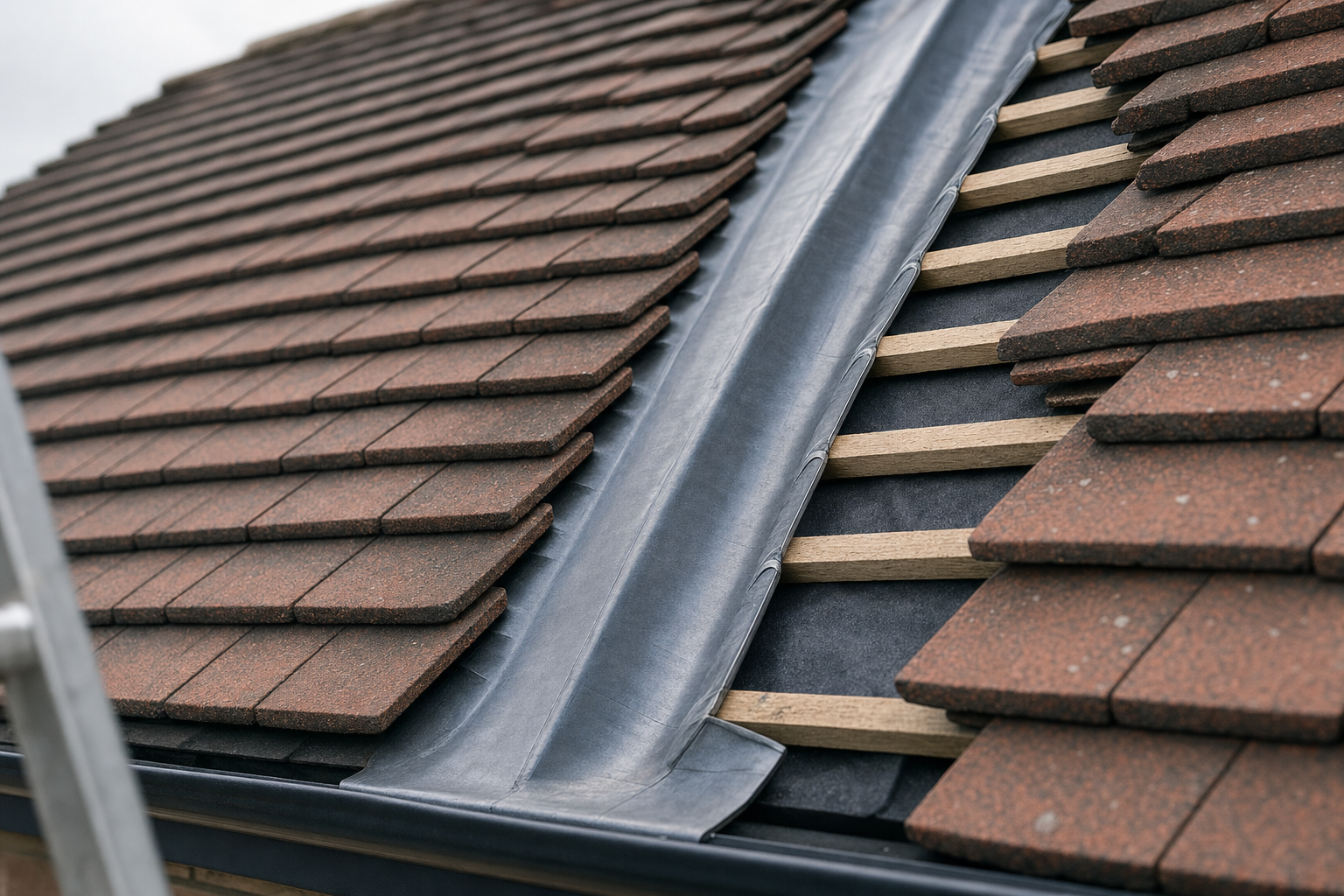
Tiles or slates beside the valley are lifted and reset carefully so the edges stay weather-tight.
Valleys take more water than most roof details
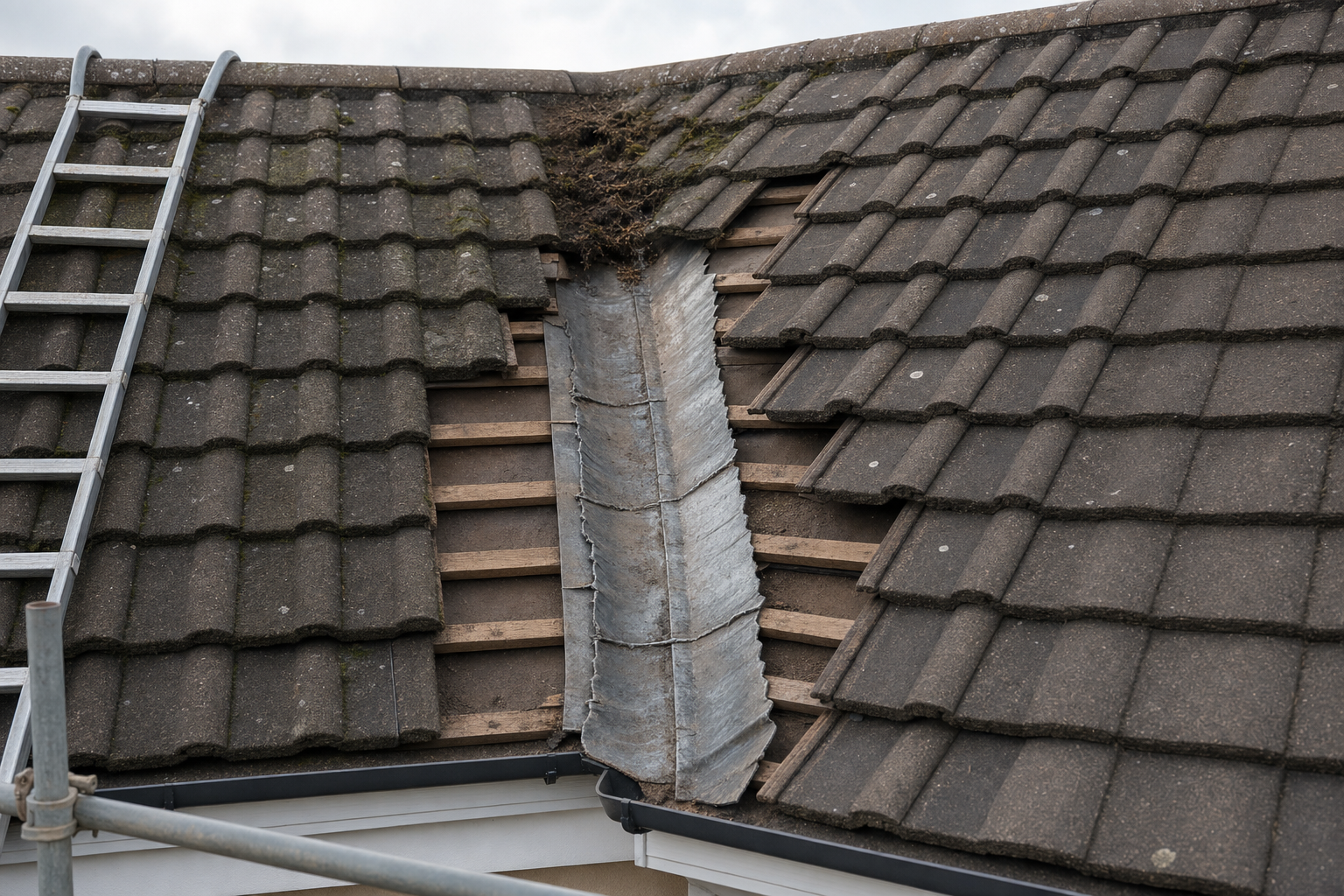
A roof valley does a hard job. It gathers rain from two slopes and channels it into one line, so even a small fault there can send a lot of water underneath the covering. Cracked bedding, split linings, displaced edge tiles, debris build-up and poor falls are all common reasons for trouble. We inspect the valley construction itself and the coverings that feed into it, because water can track beneath the edges as well as straight through the centre. With RoofShield Roofing and Maintenance, valley repairs in Grays are planned around the existing design, whether that means lead-lined work or a manufactured valley system.
Repair the channel, not just the symptom
A sound valley repair usually involves lifting the adjoining tiles or slates, checking the support, renewing damaged components and reinstating the edges accurately so the channel stays open. That is why a quick patch on the visible crack often fails. We make sure overlaps remain suitable and the fall runs uninterrupted towards the gutter, because a valley only works when water has a clean path out. Through RoofShield Roofing and Maintenance, you get careful reinstatement, straightforward advice and a repair that respects how heavily this small part of the roof is asked to work.
Frequently asked questions
What are the signs of a failing roof valley?
Common signs include water tracking beneath the covering, damp appearing where two roof slopes meet, cracked bedding, split valley linings, displaced edge tiles and heavy debris build-up. Valleys handle concentrated runoff, so small faults there tend to show themselves quite quickly once rain arrives.
Can a roof valley be repaired without replacing the whole slope?
Often, yes. If the problem is centred on the valley and the adjoining coverings remain in serviceable condition, we can lift the necessary section, renew the damaged components and reinstate the area properly. Wider work is only needed if deterioration has spread beyond the valley detail itself.
Why do valley repairs need adjoining tiles lifted?
The valley lining and support sit beneath the edges of the surrounding coverings, so those pieces usually need to be lifted to reach the problem properly. Trying to patch the visible centre line without accessing the supporting details often leaves the real weakness untouched.