
Why lead details decide whether the junction stays dry
Junction-led repairs
We focus on how the roof meets walls and stacks, where most water entry points begin.
Lead formed for movement
Expansion space, laps and sheet size are considered so the flashing is less likely to split again.
More than surface sealant
A proper flashing repair deals with the formed detail, not just the visible crack.
Most roof leaks start where materials meet
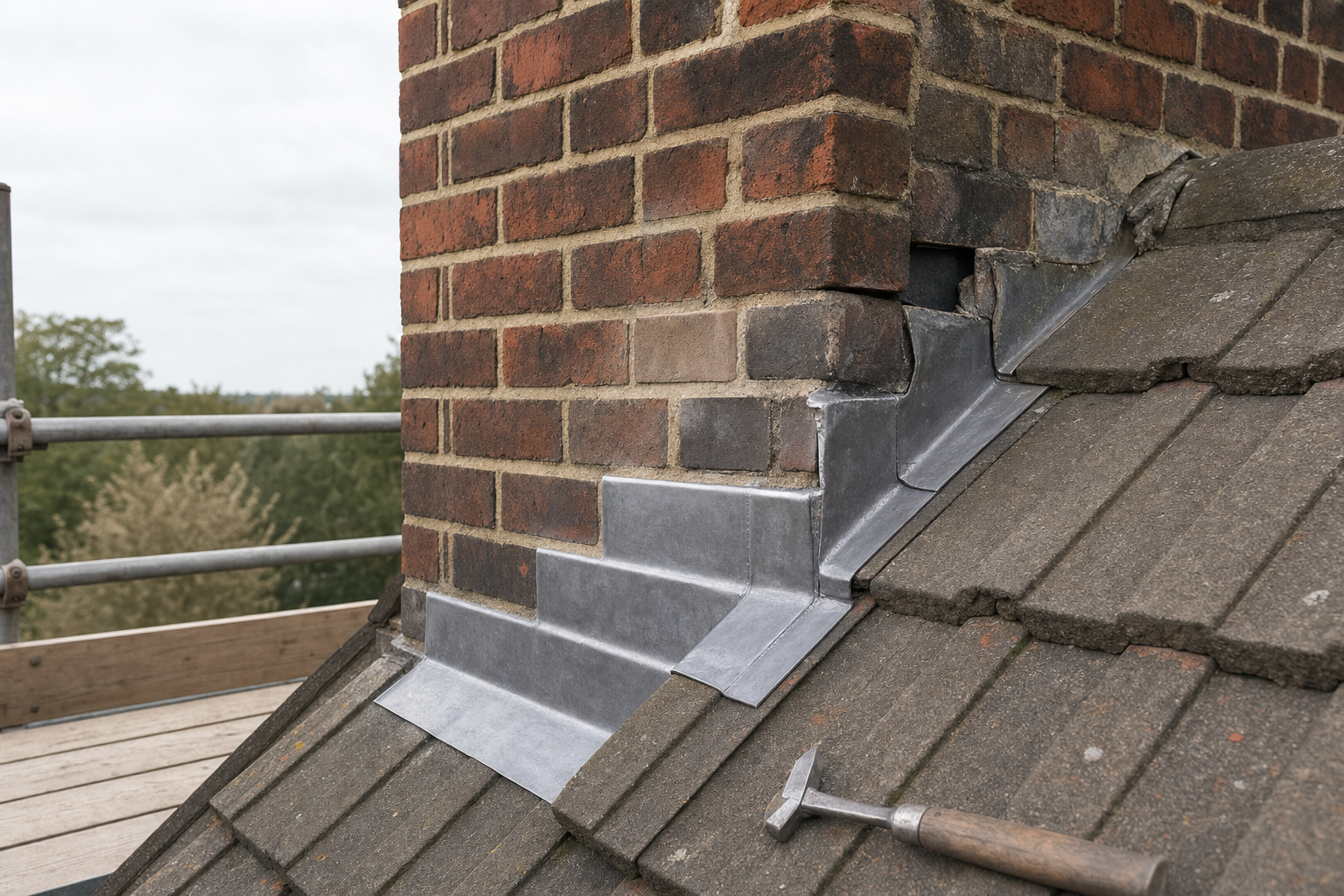
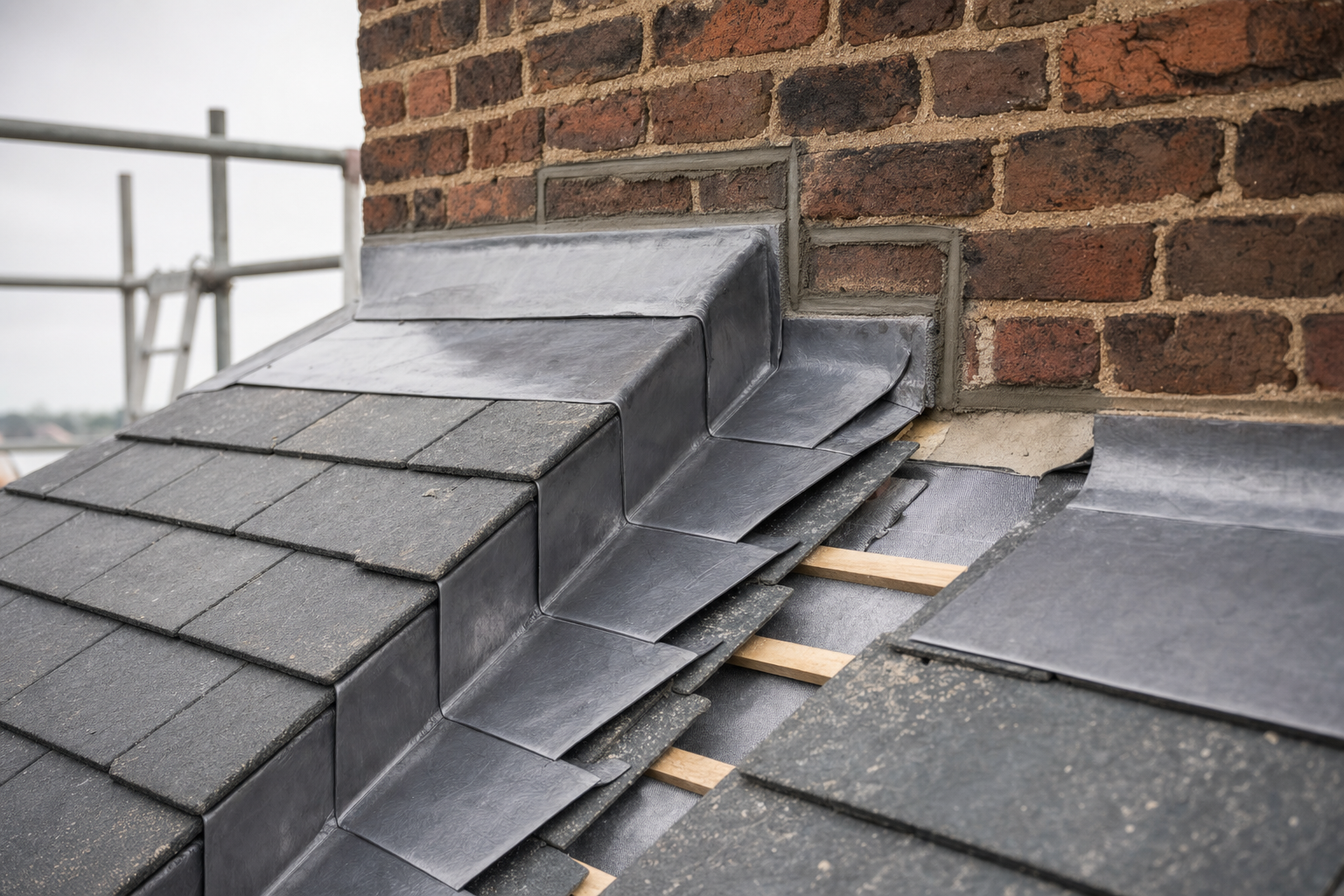
The vulnerable parts of a roof are often the junctions rather than the open slope. Where the covering meets a wall, chimney or roof penetration, flashing has to direct water back over the roof and away from the gap beneath. When lead splits, lifts or loses its seal, even a small defect can let in a surprising amount of water. We assess the condition of the existing flashing, the shape of the junction and the movement that may have caused the failure. With RoofShield Roofing and Maintenance, flashing repairs in Grays are formed around the detail itself, not rushed with surface fillers that ignore how water is meant to travel.
Repair, redress or renew the leadwork
Some lead remains serviceable and can be redressed where it has lifted or distorted. Other sections need a defined repair or full renewal because joints have failed, laps are inadequate or the sheet size has not allowed for movement over time. We pay close attention to steps, chases, overlaps and room for expansion, because those details are what make leadwork reliable through changing weather. Through RoofShield Roofing and Maintenance, the aim is simple: keep water moving over the roof covering and stop it being tempted behind the masonry or into the roof build-up.
Frequently asked questions
What does roof flashing do?
Flashing seals and weathers the vulnerable junctions where a roof meets walls, chimneys and penetrations. Its job is to direct water back over the roof covering and away from the gaps beneath, which is why even a small failure there can cause a leak indoors.
Can split lead flashing be repaired?
Sometimes, yes. If the lead is otherwise serviceable, a local repair or redressing may be possible. If the material has reached the end of its useful condition, the laps are poor or movement has caused wider failure, renewal is usually the more dependable answer.
Why does leadwork fail around chimneys and walls?
Lead is working in places where roofs move, materials expand and water is concentrated. Splits, lifting edges, failed joints and inadequate laps can all develop over time if the detail was never formed well or if the lead has simply aged and moved beyond reliable repair.