
What protects a chimney stack for longer
Top-to-bottom checks
We examine the whole stack, not just the most obvious open joint on the face you can see.
Repointing done properly
Failed mortar is removed and renewed to a proper depth for stronger, longer-lasting joints.
Repair scope explained
If the stack needs brick repairs or rebuilding, we say so before the work begins.
Loose mortar up high soon becomes water trouble
A chimney stack takes the worst of the weather, so failed joints and loose masonry do not stay minor for long. You may notice crumbling mortar on the roof, staining indoors near the breast, cracked flaunching or a pot that no longer looks secure. We inspect the stack from top to base because water entry and instability can begin at the crown, the joints or the exposed brickwork lower down. With RoofShield Roofing and Maintenance, chimney work in Grays is based on the actual condition of the masonry, which tells us whether repointing is enough or whether selective brick repairs or more substantial rebuilding makes better sense.
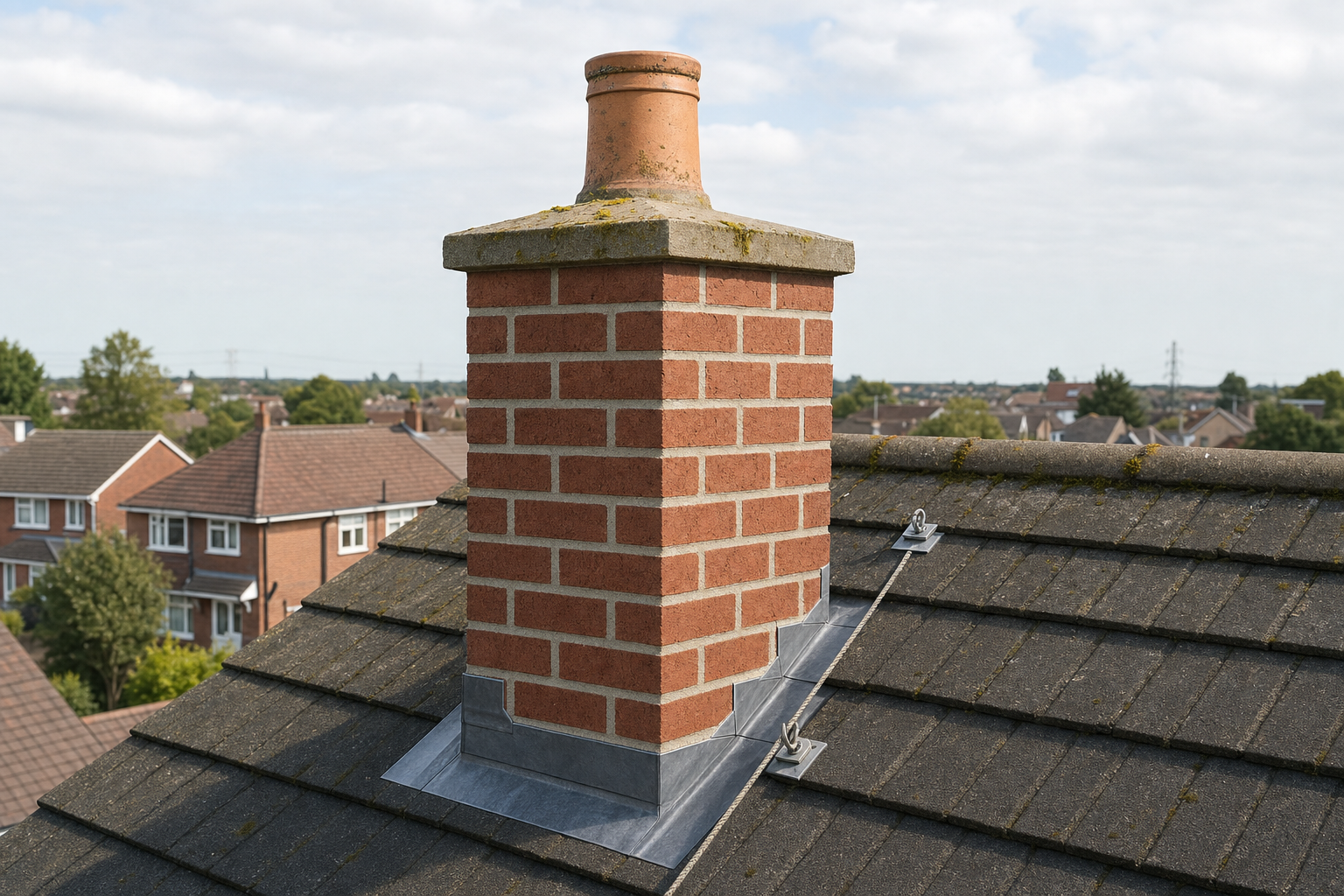
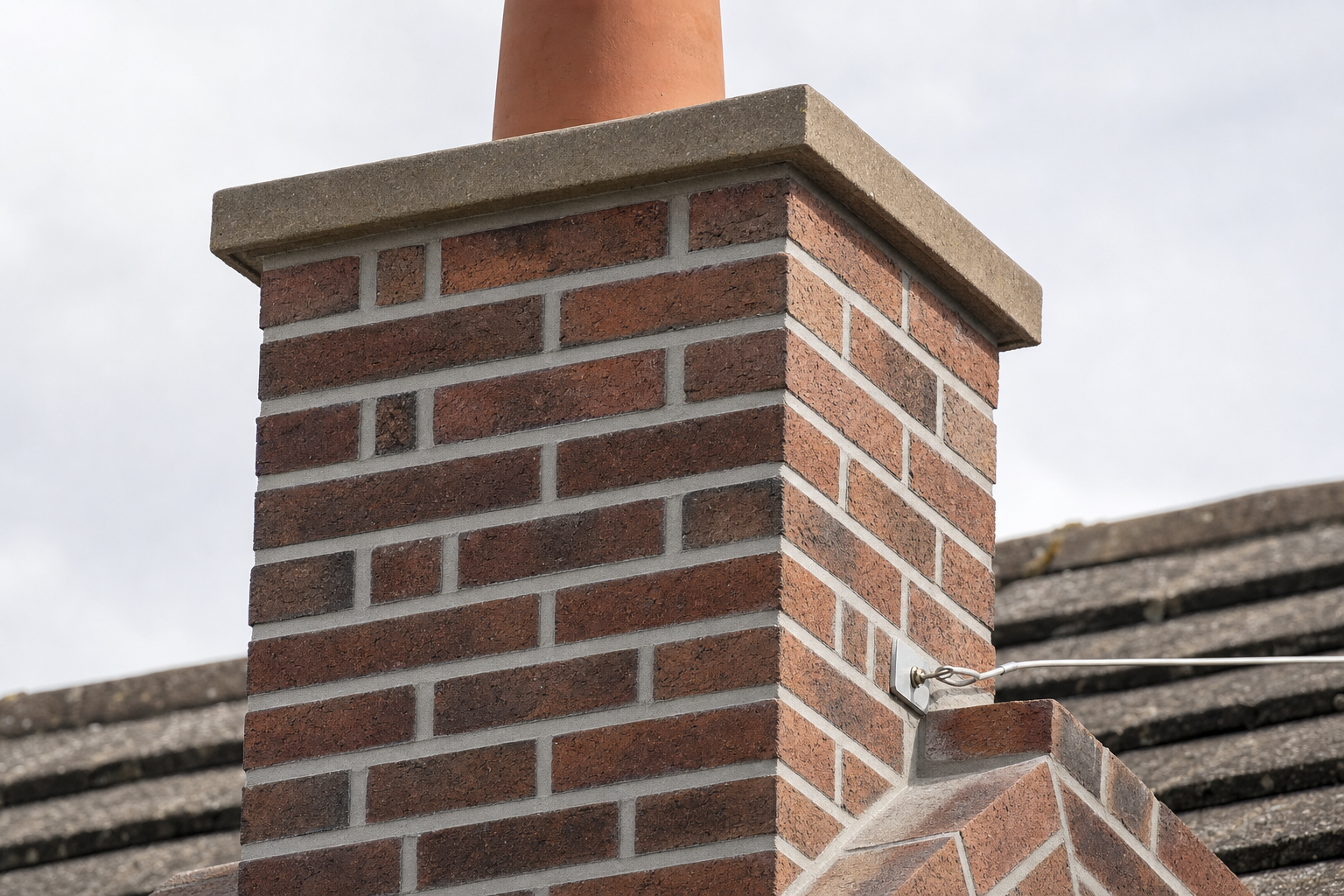
Controlled high-level work with the right scope
Repointing is not just a smear over the face of old joints. We remove failed mortar to a suitable depth, refill the joints properly and finish them to protect the stack from further weathering. Where bricks have deteriorated or movement has taken hold, we explain if the job needs to go beyond repointing. Safe access matters as much as the masonry itself, so we plan for debris control and the working space needed at roof level before the job starts. Through RoofShield Roofing and Maintenance, you get clear advice on what the chimney needs and why.
Frequently asked questions
What signs show a chimney needs repointing?
Common signs include eroded or missing mortar, bits of masonry dropping onto the roof, cracked flaunching, loose pots and damp related to the stack area. Because the defects are high up, the damage is often worse than it looks from the ground, which is why a proper inspection matters.
Can a damaged chimney be repaired without rebuilding it?
Often, yes, if the core structure is still sound and the main issue is failed mortar or localised brick damage. If movement or deterioration is more advanced, more substantial rebuilding may be the wiser route. We explain which side of that line the stack sits on after inspection.
Why does chimney access affect the job?
All chimney work takes place at roof level, so safe access is essential. The type of access needed affects how the work is organised, how debris is controlled and how thoroughly the stack can be repaired. Good masonry work starts with being able to reach the whole problem safely.