
Why roof form and scope matter before travel
Roof form discussed first
Pitch, height and covering type help us understand how the inspection in Truro should be planned.
Good for linked roofing details
Pitched slopes, slate coverings and lead junctions can be assessed as one joined-up roof system.
Scope shaped before travel
Assessment visits and larger works are planned differently so time and access are used well.
Material and roof form shape the visit
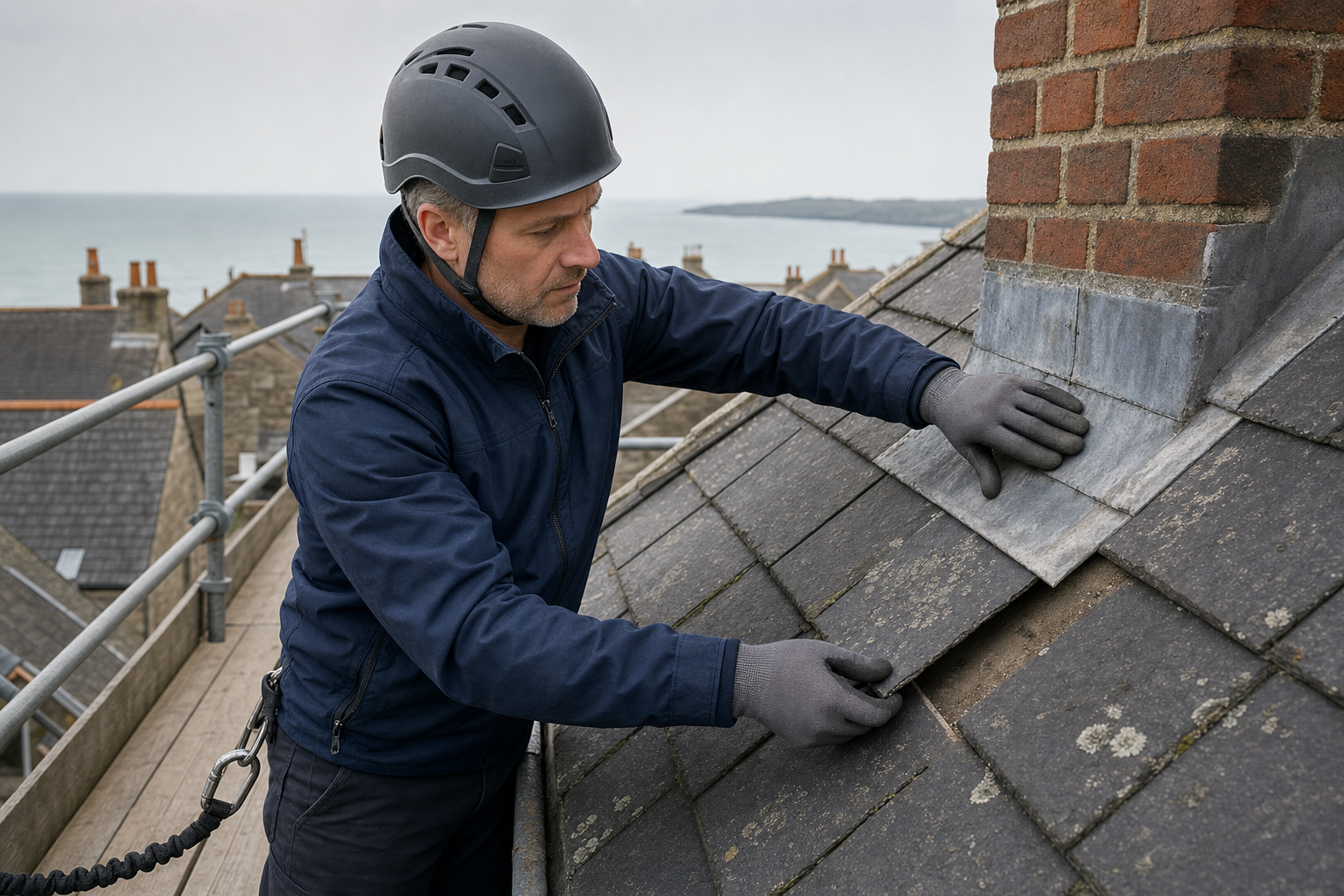
A roof in Truro may need pitched roof repairs, slate work or lead flashing attention, and each of those tasks depends on knowing more than the postcode. Roof form, covering type, the height of the property and any visible junction defects all help us understand what kind of inspection is needed before we travel. That matters because a slipped slate, a problem at a flashing line and a larger issue on a pitched slope can look unrelated until the roof is seen as one working system. With RoofShield Roofing and Maintenance, Truro visits are planned around those details so the assessment starts with the right expectations and the right areas of focus.

Assessment visits and larger projects are not the same
Sometimes the first step is an informed site assessment. Sometimes the work is already clearly a larger job that will need materials, waste arrangements, scaffolding or more involved access from the outset. We explain that difference so the Truro visit fits the likely scope rather than being treated as a one-size appointment. This is especially useful where pitched roof work, slate roofing and leadwork overlap on the same property. Through RoofShield Roofing and Maintenance, travel planning, labour and equipment are coordinated around the actual job, not an optimistic guess at it.
Frequently asked questions
What details help plan roofing work in Truro?
The roof type, pitch, covering material, height, visible defects and any access limits are all useful before we travel. Those details help us decide whether the Truro visit is mainly an assessment or the first step in planning a larger piece of work.
Can one visit assess pitched roof, slate and lead issues together?
Yes. If those details sit on the same roof, it usually makes sense to look at them as one system. A flashing problem may relate to the condition of the slate beside it, and both may be influenced by what is happening higher up the pitched slope.
How do larger roofing jobs differ from an assessment visit?
Larger jobs often need more planning around materials, access, waste and labour before dates are set. An assessment visit is there to define the problem properly. Separating those stages where needed can make the whole job clearer and better organised.